Opening an RDP connection to the Linux local instance
Learn how to open an RDP connection to your WSLg Linux instance (Ubuntu) for a full graphical desktop environment. Follow this step-by-step guide to installing and configuring xrdp.

This article is over a year old but was reviewed on July 30, 2026 — the content is still accurate.
This article is part of the WSL2 - Install, move and use it series:
- Opening an RDP connection to the Linux local instance
- Move WSL to another location
- Open your Linux folder in Windows Explorer
- Starting the default associated Windows program on WSL
- Ubuntu - Install from scratch
- Discovering Zorin

https://www.nextofwindows.com/how-to-enable-wsl2-ubuntu-gui-and-use-rdp-to-remote https://medium.com/@riley.kao/wsl2-ubuntu20-04-gui-remote-desktop-connection-rdp-2bbd21d2fa71
This article shows how to RDP into a WSL2 Ubuntu instance: installing and starting xrdp (on a non-default port like 3390 to avoid conflicts), connecting from Windows via mstsc.exe, and installing a full Xfce desktop environment (xubuntu-desktop) with startwm.sh reconfigured to launch it, so the RDP session shows a full graphical desktop instead of just a console.
When WSLg is enabled, it's possible to access the graphical user interface of your Linux distribution (in my case, it's Ubuntu).
This gives you the whole desktop of your WSL instance, and not just a window here and there. The Docker equivalent, if you'd rather not touch your WSL instance, is starting a full lubuntu desktop in Docker.
What an RDP session into WSL actually looks like
By default, a WSL instance gives you a bash console. Here is the same instance, in a Windows RDP window, with a complete Xfce desktop:
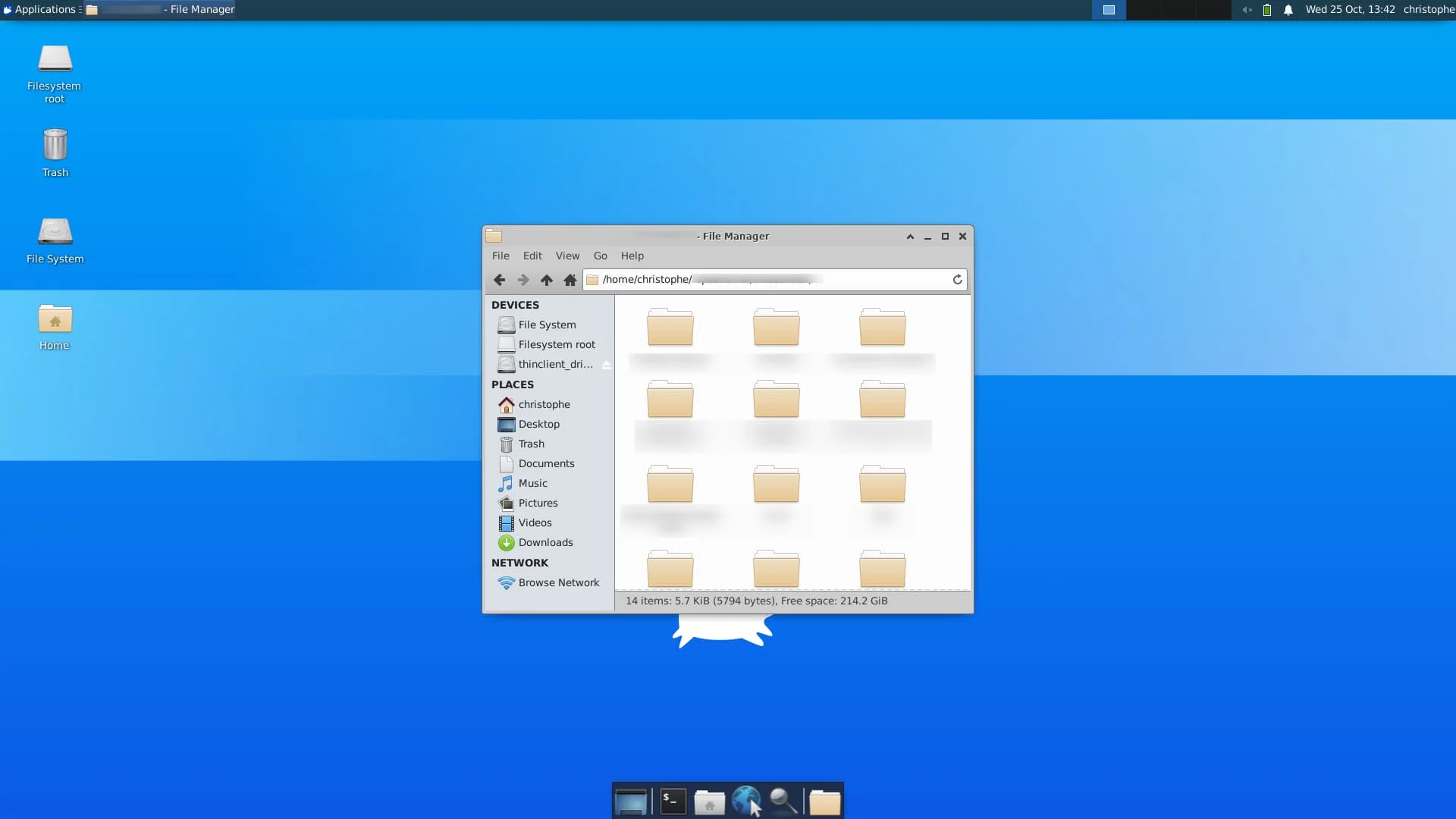
Four commands and one configuration file below, and this is what you get.
Get xrdp running
If you don't have xrdp yet, you can install it by running:
Also consider changing the port number to 3390 by running the command below and making a few minor changes. This seems to be required because, when using the default 3389 port number, you get the 'already in use' error with mstsc.
(see https://www.nextofwindows.com/how-to-enable-wsl2-ubuntu-gui-and-use-rdp-to-remote for more in-depth information)
Once done, run sudo service xrdp start to start the service. You will see the * Starting Remote Desktop Protocol server notification in the console.
Connect from Windows
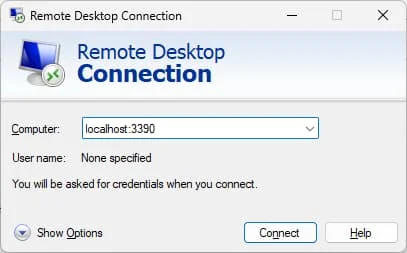
Go back to your Windows environment and start mstsc.exe and set the computer name to localhost:3390 (or the port number you are using).
Caution
The connection is only possible when xrdp is started. So, if it does not work, you know what to do (you can also run sudo service xrdp status to get detailed information).

Use your local Linux user and connect.
Get the desktop environment
At this point, you're connected, but you will just get a bash console and not the desktop illustrated at the top of this article.
If you wish the desktop and all its features, please run sudo apt-get install -y xubuntu-desktop xfce4 xfce4-goodies. You will be prompted to make a choice between gdm3 or lightdm; select the first one to get all features.
Also run sudo nano /etc/xrdp/startwm.sh to edit the file.
-
Comment out the last two lines:
# test -x /etc/X11/Xsession && exec /etc/X11/Xsession# exec /bin/sh /etc/X11/Xsession -
Add these last two lines:
# xfce4startxfce4
Finally enable dbus:
Run sudo service xrdp restart to restart the Remote Desktop Protocol Server and start mstsc.exe again. Now, you should have the full desktop.
Information
When you don't need RDP anymore, free up some resources by running sudo service xrdp stop in your Linux console.
Set your keyboard
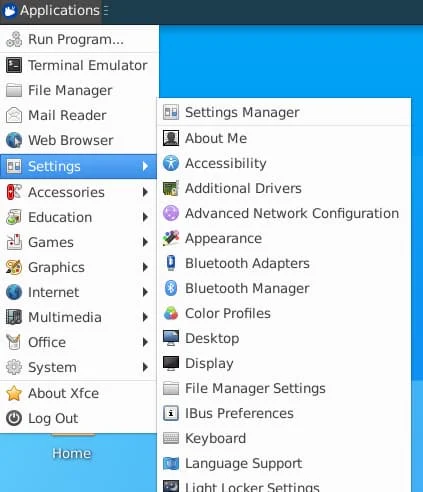
By default, the keyboard is set to QWERTY so go to Applications → Settings → Keyboard.
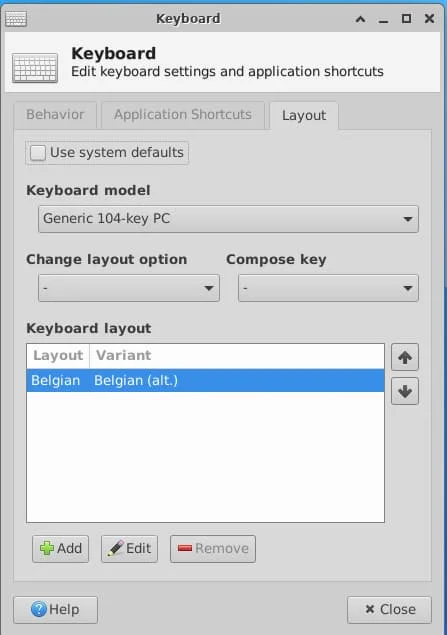
In the third tab, find your own keyboard setting. If you are using the Français - Belgique on Windows, you should set your keyboard to Belgian (alt.) on Ubuntu.
Conclusion
WSLg alone gives you isolated Linux windows floating on your Windows desktop; with xrdp and Xfce you get the entire desktop instead, taskbar and settings panel included, in a single RDP window you can minimize like any other.
If a whole desktop is more than you need: running a single graphical application from a container is lighter, and if you only want to reach your Linux files, Open your Linux folder in Windows Explorer is all it takes.
This article is part of the WSL2 - Install, move and use it series:
- Opening an RDP connection to the Linux local instance
- Move WSL to another location
- Open your Linux folder in Windows Explorer
- Starting the default associated Windows program on WSL
- Ubuntu - Install from scratch
- Discovering Zorin
Related posts
Docker Build Cache Ate 180 GB — Here's How to Get Them Back
November 2, 2026


Windows Terminal - Adding a SSH profile
January 19, 2026

Windows Terminal - Split Panes
January 12, 2026

Use a background image in your Windows Terminal console
April 24, 2025

SSH - Autosuggestions with ZSH
February 13, 2025